



Photo credits: Tierranjani Africa Ltd
From Dialogue to Action: Putting Greening into Practice in Tourism Training and Employment
Sustainable tourism is not built in isolation rather it is shaped through continuous dialogue, collaboration, and action. Under the Employment Promotion for Women for the Green Transformation in Africa (WE4D) project, a clear journey is unfolding across Kenya and Zanzibar; one that moves deliberately from discussion to implementation, and from intention to impact.
The project, implemented through Technical and Vocational Education and Training (TVET) for the Sustainable Tourism Sector in Kenya and Zanzibar, is supported by GIZ in partnership with the TUI Care Foundation. Its core aim is to strengthen women’s participation and employability in the tourism workforce by equipping them with relevant technical, green, and workplace-ready skills that respond to the evolving needs of the hospitality industry.
The journey began with the first Public–Private Dialogues (PPDs) held in both Kenya and Zanzibar. These initial engagements brought together training institutions, private sector actors, and key stakeholders to openly discuss skills gaps, labour market needs, and the growing importance of sustainability in tourism operations.
These PPDs laid the groundwork for a shared understanding:
training must be aligned with practice, and greening must be embedded into how people learn and work.
Following the PPDs, the focus shifted to developing and refining a greening curriculum, one that goes beyond theory to reflect the realities of the workplace. Sustainability was not treated as an add-on, but as a core principle to be integrated into training delivery, assessment, and work-based learning.
This stage emphasized relevance: ensuring that what is taught in training institutions mirrors what is expected in the workplace, while still meeting academic and certification requirements.
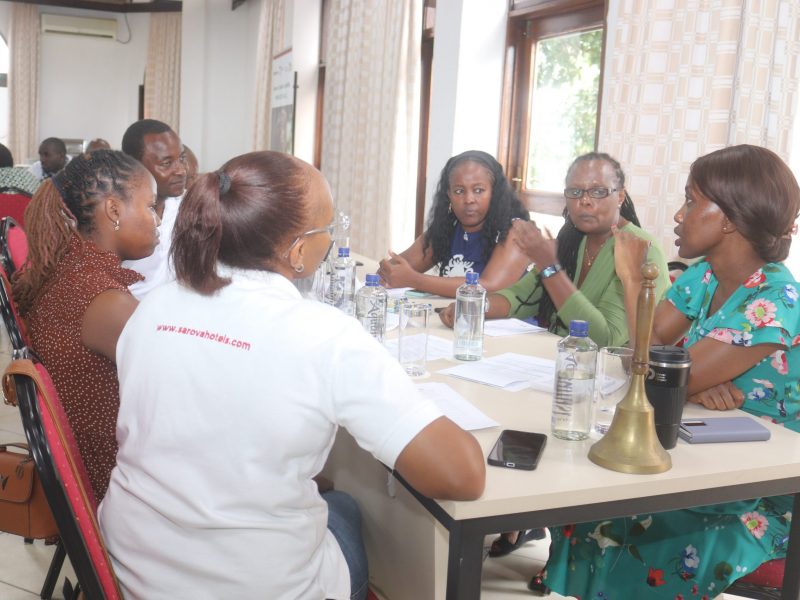
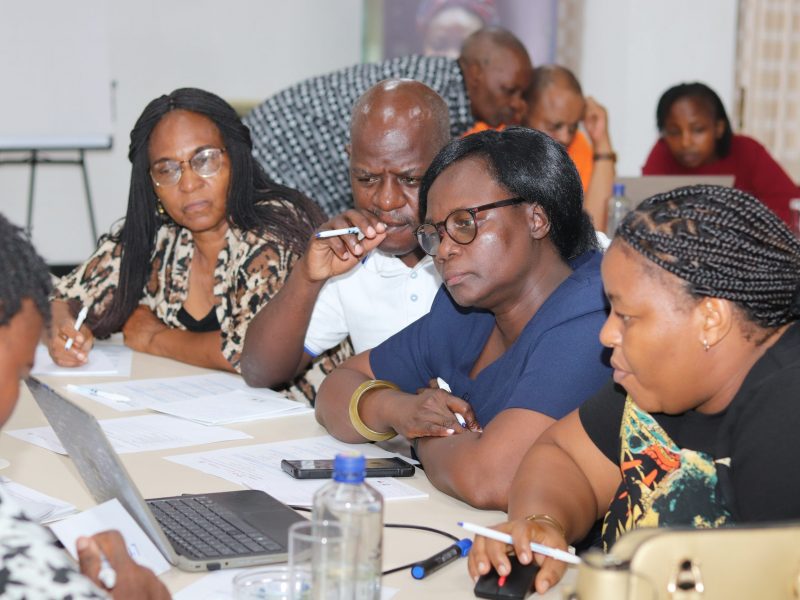
Most recently, Focus Group Discussions (FGDs) have taken this work a step further. By bringing together TVET institutions and tourism practitioners, the FGDs created space for honest, practical conversations about how greening can be applied on the ground.
These discussions demonstrated the power of co-creation—working directly with practitioners to influence curriculum design, delivery methods, and learning outcomes. It is in this space that “greening” moves from a concept to a lived practice, shaped jointly by educators and industry.
At its heart, the WE4D project is about systemic change. It seeks to:
• Embed sustainability into tourism training in a practical, measurable way
• Strengthen linkages between training institutions and the private sector
• Improve employability outcomes for women by aligning skills development with real industry needs
• Support a tourism workforce that contributes to greener, more inclusive growth
By connecting dialogue, curriculum development, and practical engagement, the project is ensuring that learning truly leads to earning and to greening.
As the FGDs take shape and collaborations deepen, one thing is clear: meaningful transformation happens when training institutions and practitioners work together, with a shared vision for a more sustainable and inclusive tourism sector.